

Why Use Promotional Videos for Business Growth

A prospective client may encounter your business for the first time on a phone between meetings, while comparing options after a referral, or moments before deciding whom to contact. Why use promotional videos in that moment? Because a well-produced video can establish credibility, clarify your value, and create an emotional connection faster than a page of claims ever could.
For organizations that compete on expertise, service, trust, or visual quality, promotional video is not decoration. It is a strategic brand asset. It gives people a reason to pay attention, a clearer understanding of what you do, and a stronger feeling about why your company is the right choice.
Why Use Promotional Videos Instead of Relying on Text Alone?
Text is essential for explaining details, supporting search visibility, and answering specific questions. But it asks the audience to do more work. Video communicates tone, environment, people, process, and confidence at once. A viewer can see the care behind a product, hear the conviction of a founder, and understand the atmosphere of an event in seconds.
That matters when your offering is difficult to evaluate before purchase. A law firm can explain its approach, but an attorney speaking directly to camera can make that approach feel more human and dependable. A technology company can list features, but a customer story can show the result of those features in a real working environment. An event organizer can describe a conference, but cinematic footage of a full room, engaged speakers, and polished presentation makes the scale tangible.
Promotional videos also help control first impressions. Rather than leaving prospects to form an opinion from a logo, a few photos, or a scattered collection of social posts, you can present a focused story with intentional visuals, messaging, music, pacing, and calls to action.
Promotional Video Builds Trust Before the First Conversation
Trust is often the deciding factor in a competitive market. Buyers want evidence that a company is established, capable, and serious about its work. A polished video provides that evidence through more than words.
It shows the people behind the brand. It can reveal an organized workplace, a thoughtful process, sophisticated equipment, satisfied clients, or the precision required to deliver a high-stakes service. For professional services, these visual signals are especially valuable. Clients may be placing their reputation, budget, personal information, or major life event in your hands. They need to feel assured before they ever submit a form or make a call.
Production quality plays a direct role here. Poor lighting, weak audio, shaky footage, or generic stock visuals can undercut the message, even when the service itself is excellent. Viewers may not articulate why a video feels unconvincing, but they notice when the details do not match a premium promise. Professional cinematography, clean sound, disciplined editing, and intentional color work tell the audience that your standards extend beyond the screen.
It Makes Complex Services Easier to Understand
Some businesses lose potential clients not because their services lack value, but because their value is hard to explain quickly. Promotional video can turn an abstract offering into a clear, memorable experience.
A corporate training provider might show how its program works inside a real organization. A medical or wellness practice can introduce its setting and staff while carefully respecting privacy requirements. A manufacturer can demonstrate the craftsmanship, testing, or scale behind a product. An architecture firm can move through a completed space in a way that still photography alone cannot replicate.
The strongest videos do not try to say everything. They identify the audience's central question and answer it with a clear narrative. What problem do you solve? Who do you solve it for? What makes your approach different? What does success look like for the client? When those answers are supported by purposeful footage, interviews, and graphics, the message becomes easier to retain.
A Story Creates More Recall Than a Sales Pitch
A list of capabilities has its place, particularly for detailed service pages and proposals. Yet viewers remember stories. They remember a founder explaining why the company began, a client describing a turning point, or a behind-the-scenes view of a team solving a difficult challenge.
That does not mean every promotional video needs dramatic narration or a sentimental arc. The right story depends on the audience. A corporate audience may respond to efficiency, expertise, and measurable outcomes. A luxury brand may need a more refined, sensory visual approach. A wedding venue or event professional may need to communicate atmosphere and emotion. The common thread is intentionality: every shot should support the feeling and decision you want to create.
Video Gives Your Marketing More Range
One professionally planned production can support far more than a single website placement. A primary brand film can be edited into shorter versions for social channels, paid campaigns, email outreach, sales presentations, trade show displays, and recruiting efforts. Interviews can become thought-leadership clips. Product footage can support future launches. Event coverage can provide months of visual material after the venue has been packed away.
This is where pre-production matters. A production team should not arrive merely to capture attractive footage. It should understand where the content will live, what aspect ratios are needed, how long each version should be, and which messages must be prioritized. Planning for multiple deliverables from the beginning makes the investment more efficient and produces a more consistent brand presence across channels.
For companies with recurring marketing needs, building a library of original visual assets is particularly valuable. It reduces dependence on generic stock footage and gives future campaigns a recognizable visual identity. Your audience begins to associate a certain level of quality, energy, and professionalism with your brand.
Why Use Promotional Videos for Sales and Recruiting?
Promotional video supports more than top-of-funnel awareness. Sales teams can use it to introduce their company before a meeting, explain a service after an inquiry, or reinforce key points in a proposal. It keeps the presentation consistent while allowing prospects to engage with your message on their own time.
For recruiting, video can show what a company feels like from the inside. Candidates want more than a job description. They want to understand leadership, culture, work environment, growth opportunities, and the kind of people they may work alongside. A thoughtful recruiting video can attract candidates who are aligned with your standards and mission, not simply those applying broadly.
The same principle applies to professional practices and service firms. When clients are choosing an advisor, consultant, attorney, or creative partner, personality and communication style matter. Video offers a direct way to show both.
The Trade-Off: Not Every Video Needs a Cinematic Budget
Promotional video is highly effective, but it should match the business objective. A major brand film, a multi-location customer story, or a campaign intended for national distribution deserves a larger creative and production investment. It requires strategy, scripting, location planning, interviews, professional lighting, high-quality audio, motion graphics, and meticulous post-production.
A shorter social campaign or timely event recap may call for a leaner approach. The goal is not to make every video look identical. The goal is to apply the right production level to the importance and expected lifespan of the asset.
What should not be compromised is clarity. Even a brief video needs a defined audience, a strong opening, clean sound, and a single purpose. Trying to speak to everyone or include every service usually weakens the final piece. A focused message is more persuasive than a crowded one.
What a Strong Promotional Video Requires
The most effective projects begin before cameras roll. The creative team should understand your audience, brand position, marketing goal, and practical constraints. From there, the project can take shape through a concept, interview direction, shot plan, production schedule, and post-production strategy.
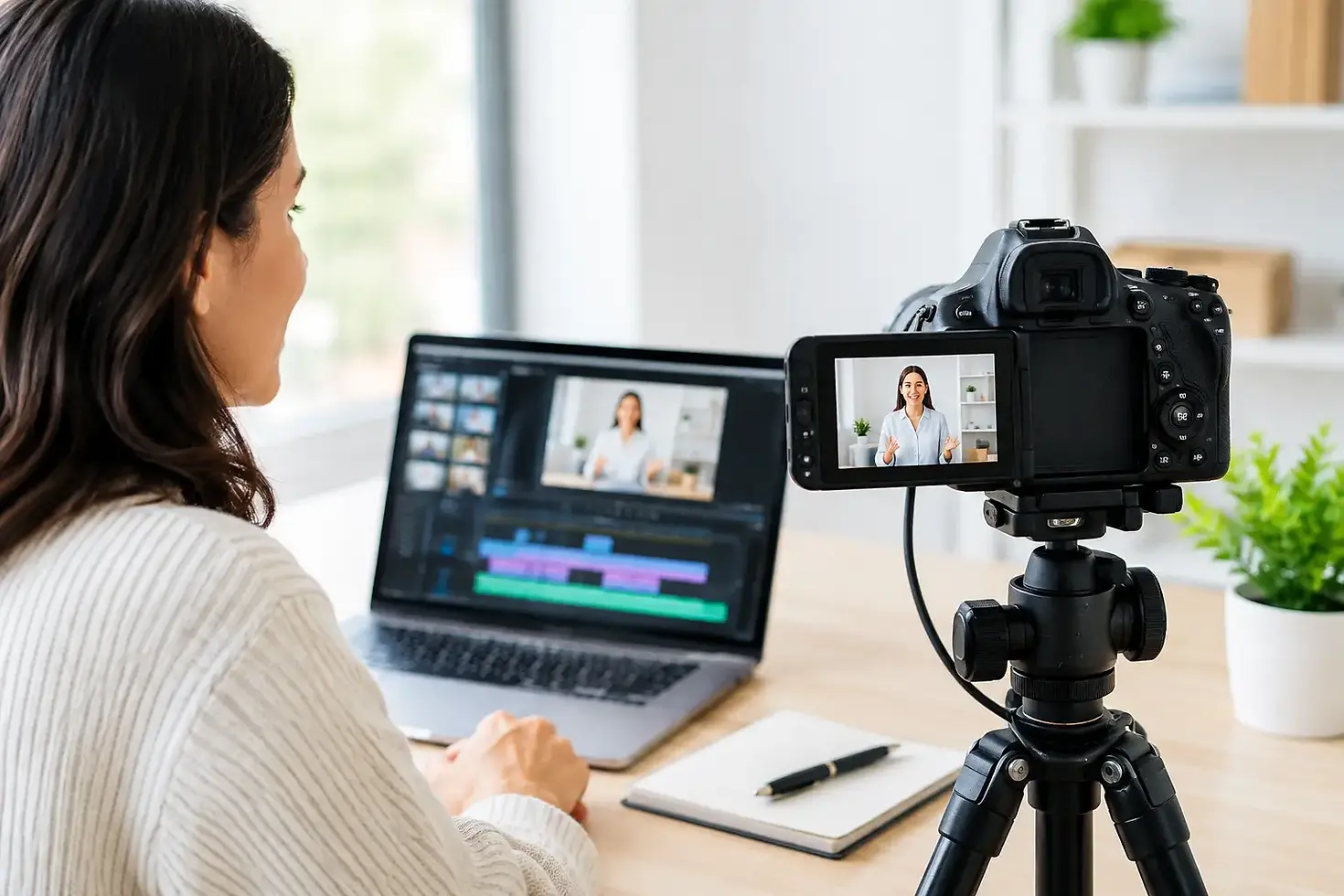
During filming, the small details determine whether footage feels polished. Lighting must suit the location and brand mood. Audio must be clear enough that viewers never strain to hear an important statement. Talent should feel comfortable enough to sound natural rather than rehearsed. B-roll should add meaning, not simply fill time.
Post-production is where the story becomes precise. Editing determines pace and structure. Color grading establishes visual consistency. Music supports the intended tone. Graphics can clarify key points without overwhelming the screen. Captions improve accessibility and make the content useful when viewers watch without sound.
At Afrang Media Productions, that level of planning and craftsmanship is central to creating promotional content that looks refined and works hard for the client long after filming ends.
The best place to start is not with a camera package or a preferred video length. Start with the moment you want to influence: the prospect deciding whether to trust you, the buyer trying to understand your difference, or the candidate imagining a future with your company. Build the video around that moment, and it can become one of the most persuasive pieces of your marketing.


Comments